
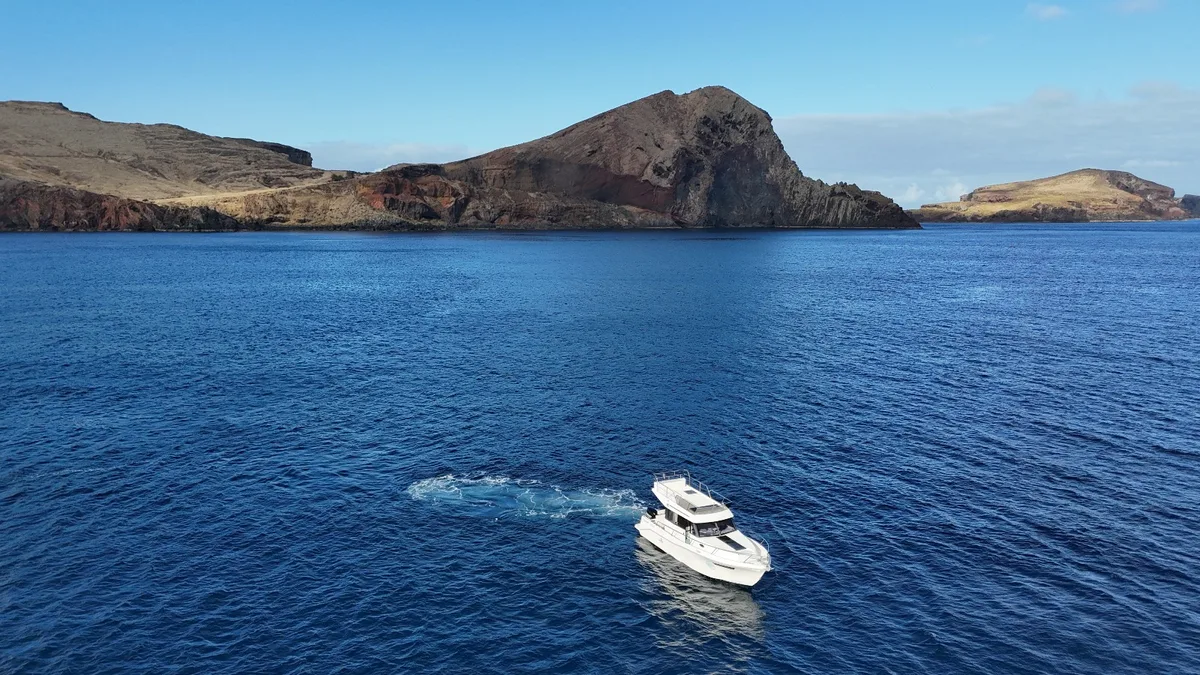
The archipelago of Madeira, rising steeply from the depths of the Atlantic Ocean, is one of the world's premier destinations for observing marine life. The island's unique topography, where the ocean floor drops to depths of up to 3,000 metres just a few miles offshore, creates an ideal habitat for a remarkable variety of cetaceans. For visitors, this means the opportunity to witness these magnificent creatures in their natural environment without enduring long, exhausting journeys out to sea. The deep waters close to the coast provide a nutrient-rich environment that sustains both resident populations and migratory species passing through the Atlantic.
However, observing wildlife in its natural habitat requires a delicate balance between human curiosity and animal welfare. The experience is profoundly different from visiting an aquarium or a controlled environment; it is unpredictable, wild, and entirely dependent on the animals' behaviour and the ocean's conditions. Understanding what to expect before you step aboard a yacht is essential for a rewarding and responsible experience. It is crucial to approach these encounters with respect and a willingness to adapt to the natural rhythms of the ocean.
This guide outlines the reality of whale watching in Madeira, detailing the species you might encounter, the seasonal variations, and the strict regulations that ensure the protection of these marine mammals. By setting realistic expectations and choosing responsible operators, you can enjoy a memorable experience while contributing to the conservation of Madeira's marine biodiversity.
Resident Species: Year-Round Encounters
One of the most appealing aspects of whale watching in Madeira is that it is a year-round activity. This is largely due to the presence of resident species that inhabit the archipelago's waters regardless of the season. While sightings can never be guaranteed, the consistent presence of these animals provides excellent opportunities for observation throughout the year, making Madeira a reliable destination for marine enthusiasts.
The Sperm Whale (Physeter macrocephalus) is perhaps the most iconic of Madeira's resident whales. Known for their deep-diving capabilities, these massive creatures hunt squid in the deep underwater canyons surrounding the islands. They are often seen resting at the surface between dives, characterized by their distinctive angled blow and the prominent hump on their back. Observing a Sperm Whale preparing for a deep dive, lifting its massive tail fluke high above the water, is a truly unforgettable sight.
Another common resident is the Short-finned Pilot Whale (Globicephala macrorhynchus). Despite their name, they are technically part of the dolphin family. These highly social animals are frequently observed in pods, moving slowly at the surface. Their calm nature often allows for peaceful and prolonged observation, provided the vessel maintains the legally required distance. They are easily recognizable by their bulbous heads and dark, robust bodies, often seen travelling in tightly knit family groups.
Migratory Visitors: The Spring and Summer Seasons
While resident species offer year-round viewing opportunities, the diversity of cetaceans in Madeira peaks during the migratory seasons. Between April and October, the waters around the archipelago become a transit route for several species of baleen whales moving between their feeding and breeding grounds. This period offers the chance to see some of the ocean's most impressive travellers.
During the spring months, particularly from April to June, the Fin Whale (Balaenoptera physalus) and the Sei Whale (Balaenoptera borealis) are occasionally spotted. The Fin Whale, the second-largest animal on Earth, is a spectacular sight, known for its speed and streamlined body. Their tall, columnar blows can be seen from a considerable distance, alerting spotters to their presence. The Sei Whale, though slightly smaller, is equally impressive and is known for its unpredictable surfacing patterns.
It is important to note that sightings of these migratory giants are less predictable than those of resident species. They are transient visitors, and their presence depends on complex environmental factors such as water temperature and food availability. Rare sightings of the Blue Whale (Balaenoptera musculus) or the Humpback Whale (Megaptera novaeangliae) do occur, but these should be considered exceptional events rather than expected highlights of a trip. The thrill of encountering these rare visitors adds an element of excitement to any whale watching expedition during the migratory season.
The Role of the "Vigias"
The success of whale watching in Madeira is heavily reliant on a traditional system that dates back to the island's whaling era, which ended in 1981. Today, this system has been repurposed for conservation and eco-tourism, demonstrating a remarkable shift from exploitation to preservation.
Spotters, known locally as "Vigias", are stationed at high vantage points along the coast. Using powerful binoculars, they scan the ocean surface for signs of cetaceans, such as blows, splashes, or the presence of seabirds. When a Vigia spots a pod, they communicate the location to the skippers at sea, guiding the vessels toward the animals. This network of spotters covers a vast area of the ocean, providing real-time information to the operators.
This land-based spotting system significantly increases the chances of a successful encounter while minimizing the time vessels spend searching at sea. It is a highly efficient and responsible method that reduces fuel consumption and limits the potential disturbance to the marine environment. By relying on the Vigias, skippers can navigate directly to the animals, ensuring a more focused and less intrusive approach.
Realistic Expectations and Operational Decisions
When planning a whale watching trip, managing expectations is crucial. The ocean is a dynamic environment, and cetaceans are wild animals with vast territories. No ethical operator can guarantee a sighting. The beauty of the experience lies in its unpredictability; every trip is unique, and the ocean always holds surprises.
Furthermore, the experience is heavily influenced by weather and sea conditions. The skipper holds the ultimate responsibility for the safety of the passengers and the vessel. If the sea state is deemed unsafe, or if weather warnings are issued by the Portuguese Institute for Sea and Atmosphere (IPMA), trips may be altered or cancelled. It is essential to understand that these decisions are made with your safety in mind and are a standard part of maritime operations.
The Importance of Animal Behaviour
Even when conditions are favourable, the behaviour of the animals dictates the encounter. If a pod is resting, nursing, or showing signs of avoidance, the skipper must respect their space and may decide to leave the area. The priority is always the well-being of the wildlife, not the duration of the observation. A responsible skipper will know when to approach and when to retreat, ensuring that the animals are not stressed or disturbed by the presence of the vessel.
Strict Rules for Marine Conservation
To protect its rich marine biodiversity, the Regional Government of Madeira has implemented strict regulations governing the observation of marine vertebrates [2] [1]. These rules, enforced by the Institute for Forests and Nature Conservation (IFCN), are designed to minimize human impact on cetaceans and ensure that whale watching remains a sustainable activity [3] [2].
Key regulations include:
- Approach Distances: Vessels must maintain a minimum distance of 50 metres from dolphins and 100 metres from whales [3] [3]. This buffer zone allows the animals to move freely without feeling threatened.
- Speed Limits: Boat speed must be reduced to less than 12 knots within 500 metres of the animals, and further reduced as the vessel approaches [3]. Sudden changes in speed or direction are also prohibited.
- Observation Time: The maximum observation time per vessel is limited to minimize stress on the animals [3]. If multiple vessels are present, they must coordinate their movements and limit their collective time with the pod.
- Prohibited Actions: It is strictly forbidden to feed, touch, or swim with whales. Swimming with certain dolphin species is only permitted under specific, highly regulated conditions and is not a standard part of most whale watching tours [3].
By choosing operators who strictly adhere to these guidelines, visitors contribute to the sustainable future of whale watching in Madeira. Responsible tourism is essential for the long-term protection of these magnificent creatures and their habitat.
Sources
This guide uses the following official or specialist references. Confirm time-sensitive details at source before making travel plans.
Practical answers before you travel.
What is the best time of year to see whales in Madeira?
Whales can be seen year-round in Madeira due to resident species like Sperm Whales and Pilot Whales. However, the highest diversity of species, including migratory baleen whales, is typically observed between April and October.
Can I swim with whales in Madeira?
No. Swimming with whales is strictly prohibited by local legislation to protect both the animals and the public. Swimming is only allowed with a few specific dolphin species, and only under the supervision of licensed operators.
Are whale sightings guaranteed on every trip?
No ethical operator can guarantee sightings. Cetaceans are wild animals in a vast ocean. While the local spotter system (Vigias) makes sightings highly likely, there are days when the animals are simply not in the area or are diving too deep to be seen.
What happens if the weather is bad?
Safety is the primary concern. If the skipper or local maritime authorities determine that sea conditions are unsafe, the trip will be cancelled or rescheduled. It is always advisable to book your trip early in your holiday to allow for flexibility.
How close will the boat get to the whales?
By law, vessels must maintain a minimum distance of 100 metres from whales and 50 metres from dolphins. The animals may choose to approach the boat voluntarily, but the skipper cannot actively pursue them or breach the exclusion zone.
What should I do if I get seasick?
If you are prone to motion sickness, it is recommended to consult a healthcare professional or pharmacist before your trip. Onboard, staying above deck, keeping your eyes on the horizon, and avoiding screens can help mitigate symptoms.