
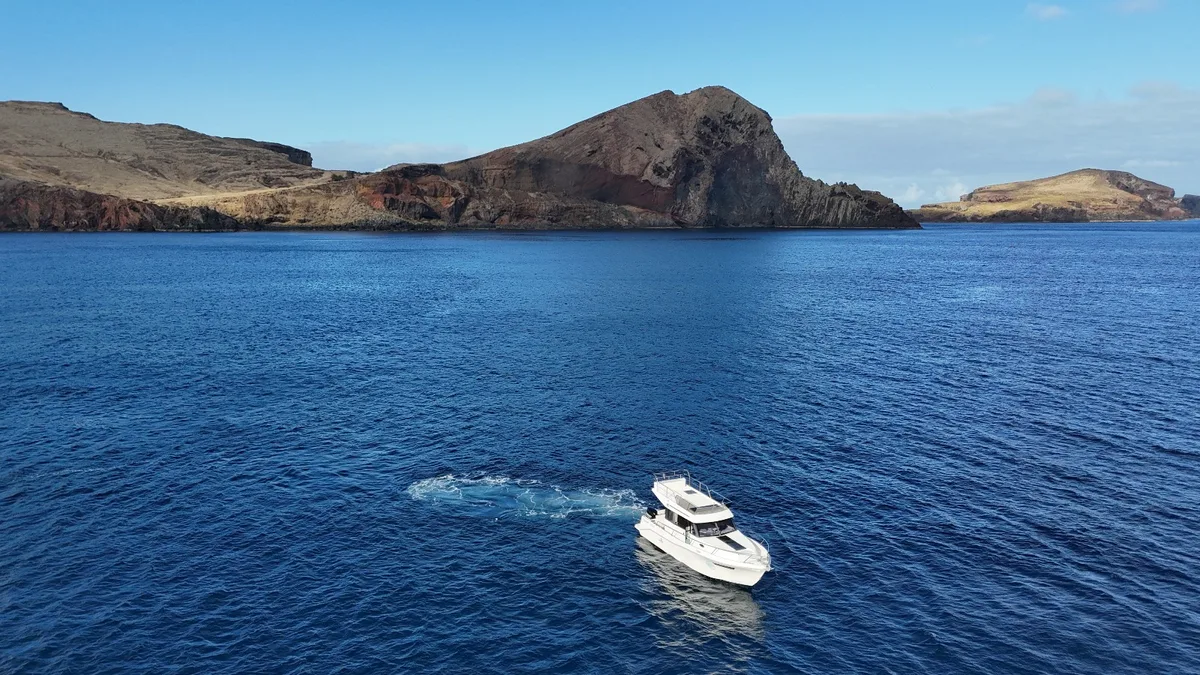
Sailing from Madeira to the neighbouring island of Porto Santo is a remarkable experience that offers a distinct contrast in landscapes. While Madeira is known for its dramatic green cliffs and deep valleys, Porto Santo welcomes visitors with its expansive golden sandy beaches and a more arid, relaxed atmosphere. A private yacht charter provides the ultimate freedom to explore this UNESCO Biosphere Reserve at your own pace, enjoying the open ocean and the pristine coastal environment away from the usual tourist crowds.
However, embarking on this journey requires careful planning and an understanding of the maritime conditions, local regulations, and the facilities available upon arrival. The crossing is not a brief coastal hop, but a proper open-water passage that demands respect for the sea and weather. Whether you are an experienced sailor or a guest relying on a professional crew, knowing what to expect ensures a safe, comfortable, and memorable trip. The transition from the towering peaks of Madeira to the low-lying, sun-drenched shores of Porto Santo is a visual treat, but it is the journey itself that often leaves the most lasting impression.
This guide outlines the essential facts you need to know before booking a private yacht charter to Porto Santo, from the practicalities of the journey to the rules governing the island's protected marine areas. By understanding the logistics and the environmental significance of the region, you can better appreciate the unique privilege of arriving at this golden island by sea.
The Journey: Madeira to Porto Santo
The maritime distance between Funchal, the main port of Madeira, and Porto Santo is approximately 44 nautical miles [1]. This is a significant crossing that takes you away from the immediate shelter of the coast and into the open waters of the Atlantic Ocean. The duration of the journey depends entirely on the type of vessel you charter and the prevailing sea conditions. A fast motor yacht might complete the crossing in a couple of hours, while a sailing yacht will take considerably longer, offering a more leisurely and traditional maritime experience.
It is crucial to understand that the crossing is heavily dependent on the weather, particularly wind and swell. The Atlantic can be unpredictable, and conditions may change. Your skipper will always prioritize safety and will make the final decision on whether the crossing can proceed based on the latest maritime forecasts. Flexibility in your itinerary is essential when planning a trip to Porto Santo. If the forecast predicts strong winds or heavy seas, the departure may need to be delayed or rescheduled. This is a standard safety protocol in maritime operations and should be factored into your travel plans.
During the passage, you will experience the vastness of the ocean. While the primary goal is reaching the island, the journey itself is part of the adventure, offering uninterrupted views of the horizon and the possibility of encountering marine life along the way.
Arriving at Porto Santo Marina
Upon reaching Porto Santo, your vessel will likely head to the Porto Santo Marina, which is situated on the southern coast of the island. The marina is conveniently located about three kilometres from the centre of Vila Baleira, the island's main town [2]. This proximity makes it easy to access local amenities, restaurants, and the famous nine-kilometre stretch of golden sand that defines the island's southern edge.
The marina is well-equipped to handle a variety of recreational vessels. It has a capacity for 139 boats on floating pontoons and provides essential services such as water, electricity, and sanitary facilities [3]. For larger yachts, it is important to note that the marina has a minimum draught of 3 metres, allowing for the manoeuvring of vessels with lengths between 6 and 30 metres [4]. The infrastructure is designed to offer a secure haven for visiting yachts, ensuring that your stay is as comfortable as possible.
When chartering a yacht, the mooring fees and arrangements are typically handled by the operator, but it is always good practice to confirm what is included in your charter agreement. The marina serves as a safe and comfortable base from which you can explore the island, whether you choose to relax on the beach, rent a bicycle, or hire a taxi to visit the interior.
Exploring the Protected Marine Areas
Porto Santo is not just about its beaches; it is also home to significant ecological reserves. In October 2020, the island was classified as a UNESCO Biosphere Reserve, recognizing its unique environmental value and the efforts to promote sustainable development. This designation highlights the importance of balancing human activity with the preservation of the island's natural heritage.
For those exploring by sea, the Porto Santo Network of Marine Protected Areas (RAMPPS), established in 2008, is of particular interest. This network includes the terrestrial parts of the six surrounding islets and the marine areas around Ilhéu da Cal and Ilhéu de Cima [5]. These areas are crucial for the conservation of local biodiversity and offer pristine environments for observation. The islets serve as important nesting grounds for seabirds and provide a sanctuary for various marine species.
Accessing the Protected Islets
If your itinerary includes visiting these protected islets, it is vital to know that access is strictly regulated. Visiting the protected islets requires prior authorization from the Institute for Forests and Nature Conservation (IFCN) [5]. Your charter operator or skipper will typically manage these permits, but you should discuss your desire to visit these areas well in advance. Furthermore, strict rules apply within the RAMPPS, including prohibitions on unauthorized fishing and any activities that might disturb the natural habitat. Respecting these regulations is essential for maintaining the ecological integrity of the reserve.
Wildlife and Marine Observation
The waters between Madeira and Porto Santo, as well as the areas surrounding the island, are rich in marine life. While the focus of the trip is often the destination itself, the journey offers opportunities to observe the natural environment. The deep oceanic trenches and underwater seamounts create habitats that support a diverse range of species.
It is important to manage expectations regarding wildlife sightings. While the region is known for its cetaceans, you cannot guarantee sightings of whales or dolphins during the crossing. These are wild animals in the open ocean, and their presence is entirely unpredictable. If you do encounter marine mammals, your skipper is legally obligated to follow strict observation guidelines, which include maintaining a minimum distance and controlling the vessel's speed to avoid stressing the animals. The priority is always the well-being of the wildlife, and any interaction must be passive and respectful.
The emphasis should be on enjoying the marine environment responsibly. The clear waters around Porto Santo are excellent for swimming and snorkelling, provided the sea state allows and you are in a safe, permitted area. The visibility is often exceptional, allowing you to appreciate the underwater topography and smaller marine life. Always follow the guidance of your crew regarding when and where it is safe to enter the water, as currents and tides can vary.
Public Facts vs. Operational Decisions
When planning your charter, it is helpful to distinguish between established facts about the destination and aspects that depend on the specific operator and daily conditions. This clarity helps set realistic expectations and ensures a smoother planning process.
Public Facts:
- The distance from Funchal to Porto Santo is about 44 nautical miles.
- Porto Santo Marina is located on the south coast, 3 km from Vila Baleira.
- The island is a UNESCO Biosphere Reserve.
- Access to the protected islets (Ilhéu da Cal, Ilhéu de Cima) requires IFCN authorization.
- The marina has a capacity for 139 boats and a minimum draught of 3 metres.
Operational Decisions (Dependent on Skipper/Operator):
- Travel Time: Varies significantly based on the yacht's speed and sea state.
- Departure Times: Dictated by weather windows and operator schedules.
- Itinerary Changes: The skipper may alter the route or cancel the crossing if weather or sea conditions are deemed unsafe.
- Permits: The operator is responsible for securing necessary authorizations for visiting protected areas.
- Inclusions: Mooring fees, meals, and specific activities depend on your charter contract.
Sources
This guide uses the following official or specialist references. Confirm time-sensitive details at source before making travel plans.
Practical answers before you travel.
How long does it take to sail from Madeira to Porto Santo?
The travel time depends entirely on the type of yacht and the sea conditions. A fast motor yacht can make the 44-nautical-mile crossing in a few hours, while a sailing yacht will take much longer. Discuss the estimated time with your charter operator based on the specific vessel.
Can we visit the small islets around Porto Santo?
Yes, but access to the protected islets, such as Ilhéu da Cal and Ilhéu de Cima, requires prior authorization from the Institute for Forests and Nature Conservation (IFCN). Your charter operator must arrange this permit in advance.
Is the crossing to Porto Santo rough?
The crossing takes you into the open Atlantic Ocean, where conditions can vary. It can be very calm, but it can also be subject to wind and swell. The skipper will monitor the weather and will only proceed if conditions are safe and comfortable for the vessel and guests.
Will we see whales or dolphins on the way?
While the waters between Madeira and Porto Santo are home to various marine species, sightings of whales or dolphins cannot be guaranteed. They are wild animals, and encounters are unpredictable.
Where does the yacht dock in Porto Santo?
Yachts typically dock at the Porto Santo Marina, located on the southern coast of the island, approximately three kilometres from the main town of Vila Baleira.
Can we sleep on the yacht in Porto Santo?
This depends on your specific charter agreement and the capabilities of the vessel. Many multi-day charters allow guests to sleep aboard while moored in the marina, but you must confirm this with your operator when booking.