
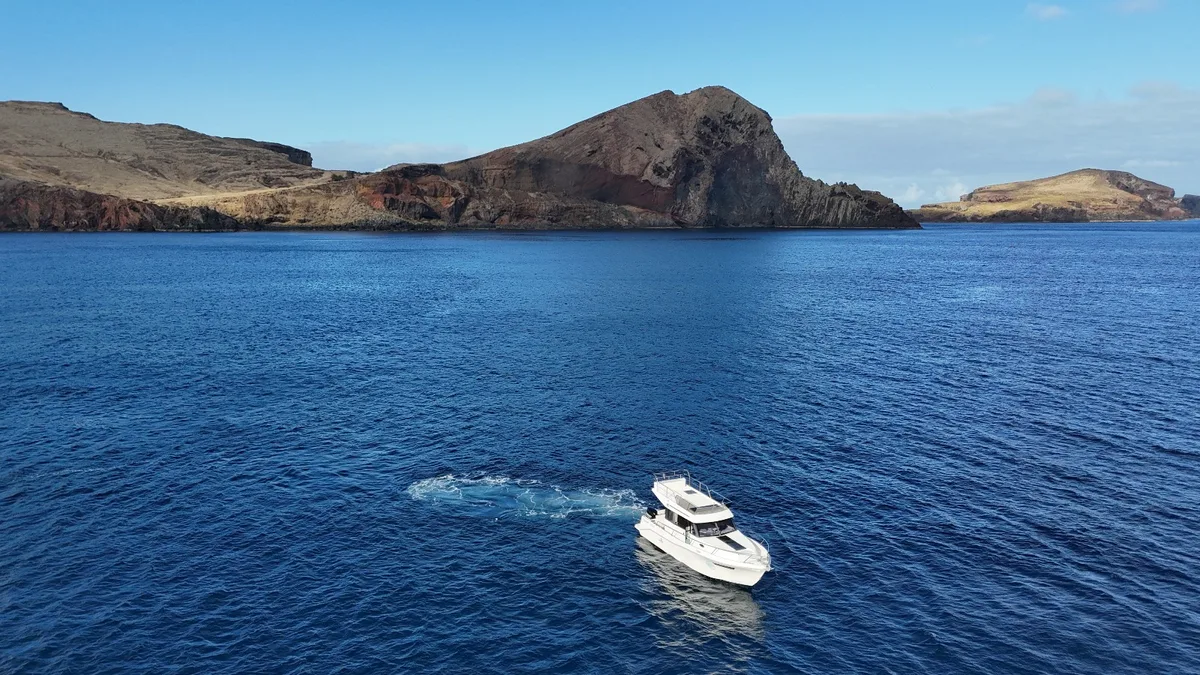
Boating along Madeira’s south coast is one of the island’s most accessible ways to combine dramatic coastal scenery with marine wildlife watching. The route between the capital, Funchal, and the harbour at Calheta runs past high cliffs, sheltered bays and a mix of habitats that attract both resident and migratory cetaceans. This guide focuses on what you can reasonably expect, how to plan, and the rules that protect the animals and the coast.
Because these are wild animals in a natural environment, sightings can never be guaranteed. There are clear legal limits on how vessels may approach and interact with cetaceans; operators and skippers must follow regional legislation and permitted codes of conduct. This article pulls together verified facts about the coastline and marine life, practical advice for planning, and an explanation of which points are public information and which depend on operator decisions.
The route at a glance: Funchal to Calheta
The recreational marina at Calheta lies approximately 16 nautical miles west of Funchal and accommodates hundreds of leisure craft — it is the second largest marina on the island with capacity for 337 berths [1]. Between these two towns the south coast is generally sheltered from the prevailing north Atlantic swell, producing waters that are relatively calm, clear and mild for much of the year — conditions that make this stretch popular for day trips, diving and wildlife observation [1].
Key landmarks along or visible from the water include the dramatic Cabo Girão cliffs, several fishing villages such as Câmara de Lobos, and numerous small bays where seabirds and occasional pinnipeds gather. From the sea you also get perspectives on levadas, terraced vineyards and the volcanic coastline that are impossible to see from the main roads.
Marine life you might see (but don’t expect guarantees)
Madeira supports a mix of resident and visiting cetaceans. Resident species include bottlenose dolphins (Tursiops truncatus) and short‑finned pilot whales, both seen throughout the year in the archipelago’s waters [3]. Migratory large whales — such as fin whales, blue whales and sei whales — pass the region mainly in spring and summer, so seasonal variation affects what observers may encounter [3]. Local scientific and conservation work on these populations is active and ongoing [6].
Always remember sightings are probabilistic: time of year, sea state, and the skill and patience of the observers all influence outcomes. Operators vary in experience and vessel type, and skippers make real‑time decisions about where to search; none of that guarantees an encounter.
The protected places: Cabo Girão and marine regulations
Cabo Girão is one of the standout coastal features on the south coast, with cliffs rising to around 580 metres above sea level and an associated marine area with elevated ecological importance [4]. The coast around Cabo Girão includes marine habitats that are part of regional conservation efforts.
Observation of marine vertebrates is regulated by regional laws and specific orders that set approach distances, permitted behaviours and licensing requirements for commercial operators. These rules are designed to minimise stress and disturbance to animals; operators must follow the relevant regional decrees and port authorities when conducting wildlife trips [5]. If you want to understand the exact limits and permissions, consult the regional legislation and ask your operator for their authorisation status before booking.
Choosing an operator and what to ask
Operators and skippers make many operational decisions that affect your trip: the departure time, exact route, search strategy for wildlife, passenger capacity, safety briefings and on‑board facilities. When choosing, ask about:
- Licences and authorisations to perform wildlife watching.
- Typical group size and the vessel type (RIB, sailing yacht, catamaran).
- Safety equipment carried and lifejacket policy.
- Cancellation and change policies in poor weather.
- Their approach policy to cetaceans and any certification or training for crew.
Operators differ: some specialise in fast searches for sightings, others focus on relaxed cruises with commentary and stops for swimming. If swimming with marine mammals or close interaction is mentioned, be cautious — such activities are generally restricted and must comply with law and authorisation requirements [5].
Practical planning: when to go and what to bring
Timing: Spring and summer bring more migratory whales, while resident dolphins and pilot whales can be seen year‑round [3]. Weather and sea conditions influence comfort and sighting chances — check the forecast with IPMA and confirm with your operator.
Clothing: Lightweight layers, sun protection, hat and a windproof layer are useful. Even on calm days, spray and wind can cool the upper deck.
Footwear: Non‑slip deck shoes or trainers.
Gear: Binoculars and a camera with a modest telephoto lens improve chances of spotting distant animals. Bring a dry bag for valuables.
Food & water: Bring sun‑safe supplies; confirm if the operator provides refreshments.
Seasickness: If you are prone to seasickness, consult a healthcare professional or pharmacist for advice before travel; operators may offer suggestions but cannot provide medical advice.
What to expect from the skipper and operator: the decision to search for wildlife, how long to spend looking, whether to anchor, and whether to pause for swimming are made by the skipper based on sea state, animal behaviour, and legal constraints. Always follow the skipper’s safety briefings and instructions.
Safety, distances and behaviour around cetaceans
Regional legislation establishes rules for the safe and respectful observation of marine mammals: these include how vessels approach, limits on speed and time spent near animals, and prohibitions on feeding or touching wild animals [5]. Operators licensed for cetacean watching should be familiar with these measures and apply them; if they are not, you should question whether that trip is appropriate.
Swimming with dolphins or whales is a sensitive subject: in most cases it is either prohibited or strictly controlled, and would require specific authorisation and safe protocols. Never attempt to swim with wild cetaceans without clear operator authorisation and confirmed compliance with the law.
What is a public fact — and what is an operational decision?
Public facts (verifiable and consistent)
- The marina at Calheta is roughly 16 nautical miles from Funchal and has capacity for 337 leisure berths [2].
- Cabo Girão cliffs reach about 580 metres and the area has marine protection status [4].
- Madeira’s waters host resident bottlenose dolphins and short‑finned pilot whales year‑round [3].
- Cetacean watching is regulated by regional legislation and orders, which place obligations on operators [5].
- The Museu da Baleia undertakes scientific work related to cetaceans in Madeira [6].
Operational decisions (vary by operator, skipper or conditions)
- Exact itinerary, departure and return times, and how much time is spent searching for wildlife.
- The vessel chosen for your trip and passenger numbers.
- Whether a trip runs on a given day: this depends on weather, sea state and skipper judgement.
- Likelihood of sighting a particular species on a given day — this varies with season and animal movements.
- Any on‑board services such as catering or commentary.
Understanding this distinction helps set realistic expectations: facts describe the environment and rules; operational choices determine your direct experience on the water.
Recommended etiquette for passengers
Follow the skipper’s instructions at all times for safety and to avoid disturbing wildlife. Keep noise and sudden movements to a minimum when animals are nearby. Do not attempt to feed, touch or swim with cetaceans unless the operator holds explicit, legal authorisation. Use biodegradable suncream if you plan to swim; avoid littering and secure loose items.
Responsible photography and recording
When photographing marine life, avoid long chases or manoeuvres that pressure groups. Use zoom and patience rather than speed. Share GPS positions of sensitive aggregations only with scientific bodies or responsible authorities — publicly broadcasting locations can expose animals to disturbance.
Sources
This guide uses the following official or specialist references. Confirm time-sensitive details at source before making travel plans.
Practical answers before you travel.
How long is the boat trip from Funchal to Calheta?
Times vary with vessel, route and weather; ask your operator for an estimated transit time for your chosen departure.
Will I definitely see dolphins or whales?
No wildlife sighting can be guaranteed. Resident species are present year‑round but sightings depend on many factors including sea state and animal behaviour [3].
Is swimming with dolphins allowed?
Swimming or close interaction is restricted and generally requires specific authorisation; check with your operator and the relevant legislation before planning any swim [5].
Are there protected areas on this route?
Yes. Cabo Girão and surrounding marine habitats have protected status and are managed for conservation [4].
Do I need special equipment or experience to join a trip?
Most commercial trips are suitable for general public passengers. Specific activities (diving, private charters) have their own requirements; confirm with the operator.
Who enforces the cetacean watching rules?
Regional conservation and marine authorities oversee compliance; licensed operators are expected to comply with regional decrees and port regulations [5].
What’s the best time of year for whale watching?
Migratory large whales are more likely in spring and early summer, while resident dolphins and pilot whales can be seen year‑round [3]. [CTA:Ask Madeira Charter about your preferred date|/en/contact]