
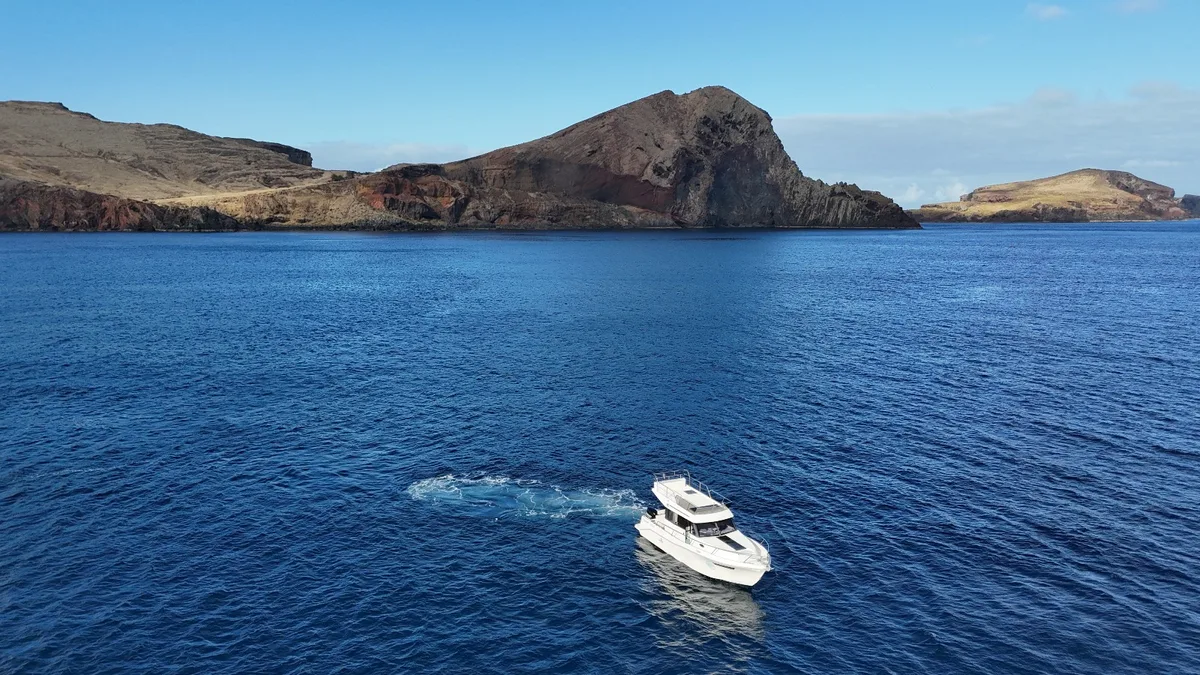
A luxury yacht charter from Funchal offers an unparalleled way to experience the dramatic coastline and marine biodiversity of Madeira. The capital serves as the premier gateway to the Atlantic, where deep blue waters provide a habitat for an extraordinary array of marine life. Whether seeking a tranquil escape along the southern coast or hoping to encounter resident cetaceans, a private day at sea promises a memorable journey.
Planning a successful yacht charter requires more than selecting a vessel. It involves understanding the maritime environment, respecting regulations that protect the natural heritage, and setting realistic expectations. The waters around Madeira are dynamic, and every voyage is shaped by the elements and crew expertise.
A private charter allows you to tailor the experience, whether that means a leisurely cruise to admire Cabo Girão, a focused excursion to observe marine life, or dropping anchor in a secluded bay. The flexibility of a private yacht means you are not bound by rigid schedules, offering a more intimate connection with the ocean.
The Funchal Marina: Your Gateway to the Atlantic
The Port of Funchal, managed by the Administração dos Portos da Região Autónoma da Madeira (APRAM), is the principal starting point for luxury yacht charters on the island [1]. Its strategic location on the sheltered southern coast provides immediate access to some of Madeira's most captivating maritime routes. From the marina, vessels can easily navigate towards the towering cliffs of Cabo Girão to the west or explore the marine reserves to the east.
The infrastructure at Funchal Marina is designed to accommodate a variety of recreational vessels, ensuring a smooth and comfortable embarkation process. When you arrive for your charter, you will find a well-equipped facility that serves as the hub for maritime tourism in Madeira. The proximity of the marina to the city centre also means that your transition from land to sea is seamless, allowing you to maximize your time on the water.
Encountering Madeira's Marine Life
One of the most compelling reasons to charter a yacht in Madeira is the opportunity to observe the island's abundant marine life. The waters surrounding the archipelago are home to 26 registered species of cetaceans [2]. Among these, the bottlenose dolphin and the short-finned pilot whale are resident species, meaning they can be found in Madeiran waters throughout the year [2]. The presence of these resident populations makes Madeira one of the premier destinations for marine observation in the North Atlantic.
While the prospect of encountering these magnificent creatures is exciting, it is crucial to approach whale and dolphin watching with a deep respect for their natural habitat. The observation of marine vertebrates in Madeira is strictly regulated by the Regional Government and overseen by the Instituto das Florestas e Conservação da Natureza (IFCN) [3]. These regulations are in place to ensure the well-being of the animals and the sustainability of maritime tourism.
It is important to remember that these are wild animals in their natural environment. Their behaviour is unpredictable, and sightings can never be guaranteed. A responsible approach to marine observation prioritizes the welfare of the animals over the desire for a close encounter.
Rules for Responsible Observation
When your yacht encounters cetaceans, the crew must adhere to specific guidelines designed to minimize disturbance. The legislation mandates that vessels maintain a minimum distance of 50 metres from whales and dolphins [3]. The approach must be gradual, and the vessel's speed must be reduced to less than 12 knots when within 500 metres of the animals, and further reduced to less than 8 knots within 300 metres [3]. These speed restrictions are critical for preventing collisions and reducing underwater noise pollution.
It is important for guests to understand that these rules are non-negotiable. The crew will not pursue animals that show signs of distress or avoidance, and the maximum observation time per group of cetaceans is limited to prevent undue stress. Furthermore, feeding or attempting to touch the marine life is strictly prohibited. These actions can alter the animals' natural foraging behaviour and expose them to disease.
Navigating Marine Protected Areas
Madeira is home to several significant marine protected areas, which play a vital role in preserving the region's biodiversity. The archipelago includes the Selvagens Islands, which constitute the largest Marine Protected Area in Europe and the North Atlantic [4]. Additionally, the SIC Cetáceos area was established in 2016 to safeguard the populations of cetaceans, loggerhead turtles, and Mediterranean monk seals [5]. These protected zones are essential for maintaining the ecological balance of the region.
During your charter, your skipper will navigate with these protected zones in mind. There are specific exclusion zones where the observation of cetaceans is prohibited to offer the species a sanctuary from human activity [5]. Your crew's knowledge of these areas ensures that your journey is not only enjoyable but also compliant with the environmental protections that keep Madeira's waters pristine.
Understanding Weather and Sea Conditions
The success of any yacht charter is heavily dependent on the weather and sea conditions. While Madeira generally enjoys a mild climate, the maritime environment can be unpredictable. The Instituto Português do Mar e da Atmosfera (IPMA) provides regular maritime forecasts that are essential for the safe planning of boat trips [6]. These forecasts take into account a range of factors, including wind speed, wave height, and atmospheric pressure.
Your skipper will continuously monitor these forecasts and the advisories issued by the Captaincy of the Port of Funchal. It is essential to recognize that the skipper has the final authority regarding the safety of the vessel and its passengers. If sea conditions deteriorate, the skipper may need to alter the itinerary, change the destination, or, in extreme cases, cancel the trip. Flexibility is a key component of planning a day at sea.
Public Facts vs. Operational Decisions
When planning your luxury yacht charter, it is helpful to distinguish between established public facts and the operational decisions made on the day of your trip. This distinction helps to set realistic expectations and ensures a smooth and enjoyable experience.
Public Facts:
- The regulations governing the observation of marine life, including approach distances and speed limits, are fixed by law [3].
- The boundaries of marine protected areas and exclusion zones are legally defined and must be respected by all vessels [5].
- The presence of resident cetacean species in Madeiran waters is a documented scientific fact [2].
Operational Decisions:
- Itineraries: The exact route taken during your charter is determined by the skipper based on real-time weather, wind, and sea conditions.
- Sightings: While cetaceans are present, sightings can never be guaranteed as these are wild animals moving freely in a vast ocean.
- Activities: Decisions regarding where it is safe to anchor for swimming or snorkelling are made by the skipper, prioritizing passenger safety and environmental regulations.
Practical Planning for Your Charter
To ensure a comfortable and enjoyable experience, a little preparation goes a long way. When packing for your luxury yacht charter, consider the dynamic nature of the ocean environment. The conditions at sea can be quite different from those on land, and being properly equipped will enhance your comfort throughout the day.
- Clothing: Dress in layers. While the sun can be warm, the sea breeze can be cool, especially when the yacht is underway. A light, windproof jacket is highly recommended to protect against the chill of the wind.
- Sun Protection: The reflection of the sun on the water increases UV exposure. Bring high-SPF sunscreen, sunglasses with polarized lenses to reduce glare, and a wide-brimmed hat to protect your face and neck.
- Footwear: Soft-soled, non-marking shoes are ideal for moving safely around the deck of a yacht. They provide grip on wet surfaces and protect the vessel's decking.
- Seasickness: If you are prone to motion sickness, consult a healthcare professional or pharmacist about preventative measures before your trip. It is best to take any medication well before boarding, as treatments are generally more effective when taken proactively.
Sources
This guide uses the following official or specialist references. Confirm time-sensitive details at source before making travel plans.
Practical answers before you travel.
Can we guarantee that we will see whales or dolphins during the charter?
No. While Madeira has a rich population of resident and migratory cetaceans, they are wild animals in their natural habitat. Sightings can never be guaranteed, and their presence depends on various natural factors.
Are we allowed to swim with the dolphins or whales?
Swimming with dolphins or whales is strictly regulated in Madeira and generally prohibited without specific, hard-to-obtain licenses. Standard luxury yacht charters do not include swimming with cetaceans to ensure the protection and well-being of the animals.
Who decides the final route for the day?
The skipper has the final authority over the itinerary. While your preferences are taken into account, the skipper will make operational decisions based on real-time weather forecasts from the IPMA, sea conditions, and safety considerations.
How close can the yacht get to the marine life?
By law, vessels must maintain a minimum distance of 50 metres from whales and dolphins. The approach must be slow and careful, and the animals must be allowed to control the interaction.
What happens if the weather is bad on the day of our charter?
Safety is the primary concern. If the IPMA or the Captaincy of the Port of Funchal issues warnings, or if the skipper determines the conditions are unsafe, the charter may be rescheduled or the itinerary significantly altered.
Can we anchor anywhere we want along the coast?
No. Anchoring is subject to maritime regulations and environmental protections. The skipper will only anchor in designated, safe areas that do not damage the seabed or violate the rules of marine protected areas.